Outfield Preview Review
What trailers and Steam details reveal before hands-on access.
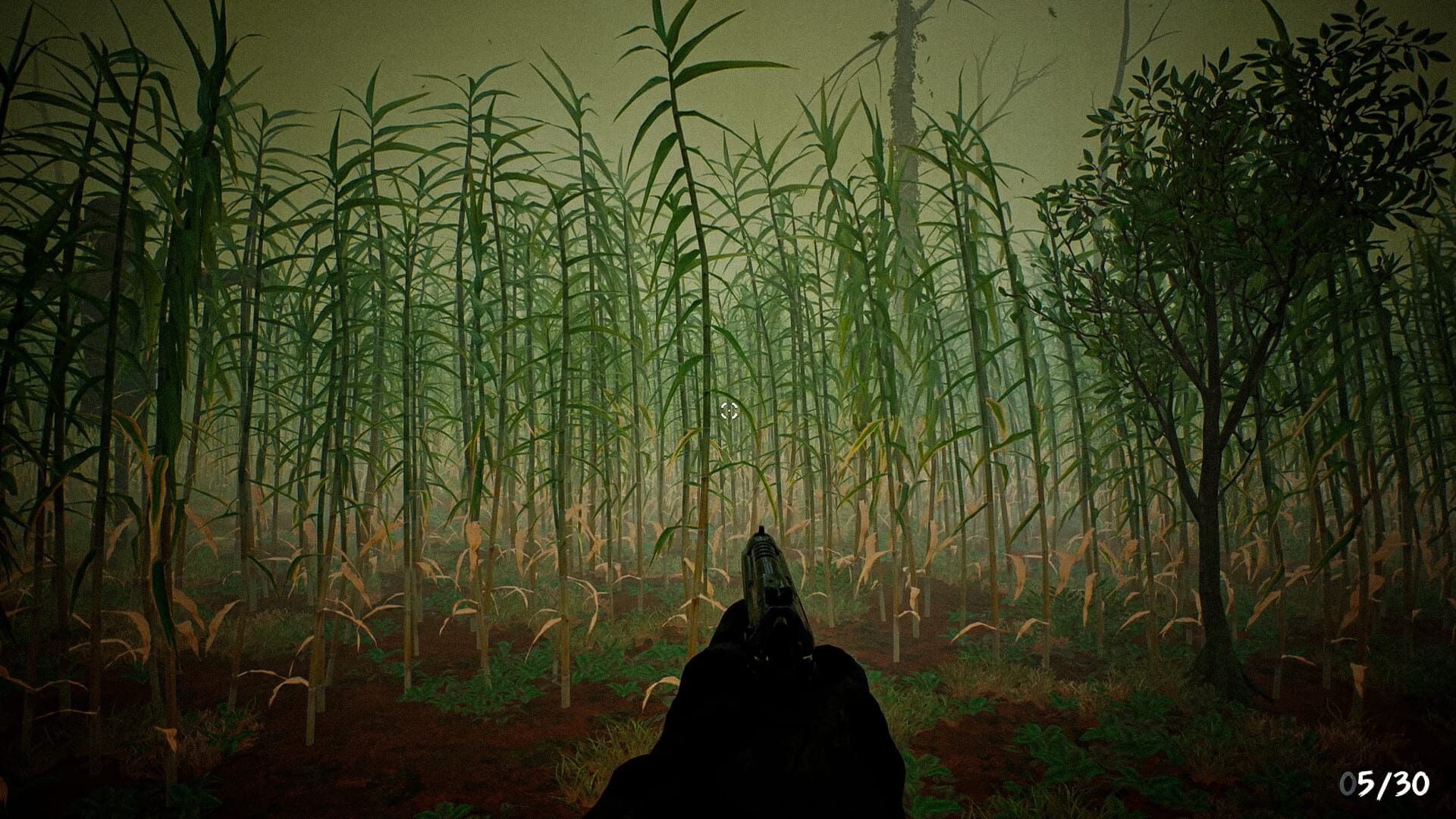
Outfield arrives at a moment when survival horror roguelites are crowded, yet Mathis Debaussart’s pitch stands out by making sound the central resource instead of a cosmetic detail. Store copy and preview footage show first-person movement through procedural tall grass, a single gun with scarce ammo, scarecrows that gate character progression, and an unseen hunter that reacts to player noise. This preview review summarizes publicly available material ahead of the July 29, 2026 Steam release— with the store countdown under two days on July 28, 2026—documented on Release Date. This is not a scored review of final build quality, which requires launch-day playtime.
Outfield also appears in GameGrin’s Top 34 New Steam Games list for July 27–August 2, 2026 (Press Coverage). That visibility does not change mechanics but signals growing pre-launch discovery alongside other July 29 launches.
Treat every impression here as pre-release analysis. After launch, compare notes with your own runs, follow Launch Day Guide for unlock prep, and watch Patch Notes for mechanics that differ from marketing.
First impressions from official material
Atmosphere: Screenshots emphasize wide fields, oppressive horizon lines, and horror lighting at dusk. The aesthetic communicates isolation rather than action-hero empowerment—consistent with psychological horror tags on Steam.
Tagline clarity: “It hears you” communicates the stealth contract immediately. Every shot and footstep is positioned as a strategic cost, aligning with wiki guidance on Best Upgrades that ranks ammo and noise tools highly.
Roguelite structure: Runs generate unique layouts with weather and day/night variation. Failure resets progress within the run but milestone upgrades during a single attempt create the classic “just one more try” loop.
Core gameplay loop (preview-level)
Based on store feature bullets and trailer pacing:
- Spawn into a procedural field with obstacles and visibility that change each attempt.
- Locate scarecrows that act as progression nodes—destroy them to earn XP.
- Choose upgrades at milestones from randomized offers (speed, ammo, and additional stat bumps per official examples).
- Manage sound while moving and shooting; the antagonist uses audio cues to pressure the player.
- Survive escalating threat as time passes—the hunter is described as becoming faster, more aggressive, and less predictable.
- Chase personal records when the run ends, restarting with new map DNA.
The loop rewards planning tools like Upgrade Run Planner because random offers punish players who have no priority list when milestones hit under stress.
Sound and stealth systems
Preview footage suggests footstep-sensitive stalking rather than visible waypoint chasing at all times. Gunfire appears loud enough to justify ammo miser playstyles in Build Recommendations. Rain is marketed as masking sounds, creating windows for repositioning or justified shots— a dynamic that should keep runs from settling into one optimal rhythm.
Without a public demo, exact detection radii remain unknown. Expect launch-week community testing to map safe crouch speeds and sprint thresholds; update personal checklists from Survival Checklist when those numbers firm up.
Combat and weapon handling
Outfield advertises one gun—not a full arsenal. That constraint pushes horror tension: missing shots wastes both ammo and silence. Preview clips show deliberate aiming rather than arcade strafing, matching FPS tags but not fast battle royale cadence.
If final balance keeps time-to-kill on scarecrows moderate, players will fire in short bursts then relocate—a pattern the Quiet Stalker archetype formalizes.
Weather and day/night
Dynamic weather and day/night cycles are headline features. Night reduces vision; rain modifies audio propagation. Together they act as run modifiers that reward attentive players and punish autopilot routing.
Night-focused strategies may dominate leaderboard attempts if darkness substantially narrows safe movement angles. Conversely, rain-heavy seeds might favor aggressive clears during storms. Preview material supports both styles without proving which will dominate statistically at launch.
Progression and replay value
Milestone upgrade choice is the roguelite identity here—not a persistent hub town emphasized in marketing. Long-term engagement hinges on procedural variety, personal record chasing, and mastery of stealth fundamentals.
If post-launch patches add meta progression outside runs, document them on Updates Hub and revisit tier assumptions. Until then, skill expression lives inside individual attempts.
Presentation and accessibility notes
Steam lists custom volume controls and stereo sound—important for a audio-centric horror game. Players should verify footstep mix against music early; misconfigured sliders could make the game feel unfair even when detection is working as designed. Full PC specs including 6 GB storage and GTX 1060 minimum GPU are broken down on System Requirements.
Languages at preview: English and French. Wiki readers needing French UI can switch site locale when translations ship.
Strengths suggested by previews
- Clear hook tying horror tension to player-generated sound.
- Strong visual identity in tall-grass environments.
- Systems that interact—weather, time, upgrades—without requiring dozens of weapon types.
- Indie scope that matches solo developer publishing on Steam.
Open questions until launch
- Exact upgrade pool size and duplicate handling rules.
- Whether scarecrow positions are fully random or biome-seeded.
- Hunter AI tell frequency—how often players receive audio warnings before contact.
- Performance on lower-end GPUs in dense grass draw distance.
- Presence of accessibility toggles beyond volume for visual night sections.
Launch players should answer these in community threads; we will fold confirmed answers into Getting Started and tier pages.
Who preview material suggests the game is for
Outfield targets players who enjoy tense stealth, roguelite rerolls, and atmospheric horror without squad-based coordination. It is less aligned with cooperative extraction or build-drafting lobbies. If you prefer loud power fantasy shooters, preview tone indicates mismatch unless you adopt the High-Risk Breaker archetype knowingly.
Verdict before release
On paper and in trailers, Outfield presents a coherent survival horror roguelite where discipline matters as much as aim. Pre-release material supports wiki investment in sound-first guides, upgrade tier theory, and checklist tooling even before code is in players’ hands.
Final judgment waits for playable release on Release Date. Wishlist on the official Steam page linked from Links Hub, then return here post-launch for an updated section comparing preview promises to shipped gameplay.
Frequently Asked Questions
Quick answers to the most common questions.
Is this a full scored review?
No. It analyzes pre-release Steam material and trailers until launch-day playtesting is possible.
Does preview footage show the full upgrade list?
Marketing highlights examples like speed and ammo, not the complete pool. Expect surprises at launch.
How scary is Outfield based on previews?
Tone is atmospheric psychological horror with stalking tension rather than constant combat swarms.
Will this page update after launch?
Yes. We will add a shipped-versus-promised section and link major balance notes from Patch Notes.